Blog
6 signs of worn washing machine bearings
By ProServ
On this page
Worn washing machine bearings rarely fail without warning. The bearings let the drum spin smoothly at 1,000 to 1,400 revolutions a minute on many front loaders while it carries a heavy, wet load, and as they wear, the machine starts telling you: a rumble on spin, a rough feel when you turn the drum, a drip under the machine. Acting on those signs early matters, because a bearing repair grows bigger and dearer the longer the machine keeps running on worn ones.
Below are the six signs to look and listen for, the simple checks you can do safely, the faults that sound similar, and what a bearing repair actually involves.
What drum bearings do
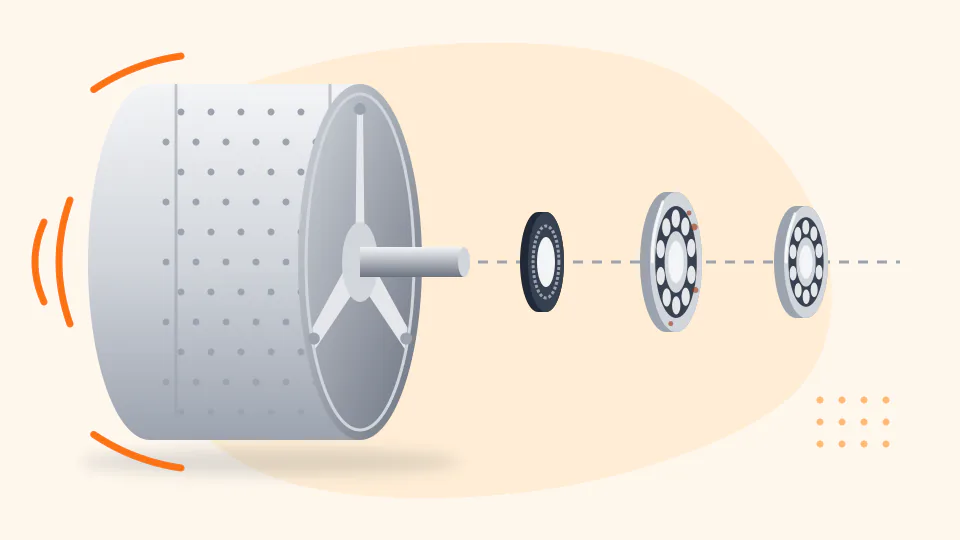
On a front loader, the drum is fixed to a metal bracket on its back called the spider. A shaft runs from the spider through the back of the outer tub, where it turns in two bearings held in a housing. In front of the bearings sits a rubber shaft seal that keeps the wash water away from them.
Because a front loader’s drum hangs on its side from that shaft, the bearings carry its full weight, the wet load and the forces of a fast spin. Top loaders have bearings and a seal under the tub that do a similar job, and when they wear, the symptoms are much the same: noise on spin and, in time, water underneath.
There’s no fixed lifespan for bearings. It depends on how often the machine runs, how heavily it’s loaded and how long the seal stays watertight.
Signs you can hear
1. A rumble or roar on spin
This is the classic sign. It starts as a low rumble, grows louder as the drum speeds up, and in the late stages sounds like a jet engine or a passing train. It’s usually quiet while the drum turns slowly during the wash and loudest in the final spin. If the noise rises and falls with the drum speed, rather than only appearing while the pump is draining, bearings are a likely cause.
2. Scraping or rubbing
As the bearings wear further, the front of the drum drops. It can then catch the outer tub or the door seal, making a scraping or swishing noise on every turn, and you may find marks on the drum or a worn patch on the seal. By this stage the damage is spreading, so don’t wait.
Signs you can feel
Safety first: do these checks with the machine switched off at the wall and unplugged, the drum empty and the door open. Never remove panels or run the machine to look inside it.
3. A rough or gritty drum
Turn the drum slowly by hand, a few times in each direction. A healthy drum turns smoothly and quietly. With worn bearings, it often feels rough, gritty or notchy, and you may hear a faint grinding.
4. Play in the drum
Hold the top edge of the drum opening and lift it up and down, then push it from side to side. The whole tub moving on its springs and shock absorbers is normal. What you’re feeling for is the drum moving on its own, separately from the tub, often with a knock or a clunk. That movement means the bearings have worn.
Both checks are easiest on a front loader. On a top loader, go by the noise and by any water underneath, and leave the rest to the technician.
Signs you can see
5. Water under the machine
Bearings usually fail because the shaft seal in front of them failed first. Once water gets past the seal, it washes the grease out of the bearings, and they rust and wear quickly. The same failed seal can let water drip from the back of the tub, so a puddle appears under the middle or back of the machine. A washing machine leaking at the same time as it rumbles on spin points strongly to the seal and bearings.
6. Rust-coloured marks
Water that has passed through the bearings picks up rust, so a leak from this area can leave brown, rusty marks or drips. When a technician opens the machine, rust streaks running down the back of the tub from the bearing housing are a tell-tale sign. You won’t see those without removing panels, so leave that part to the technician.
Noises that aren’t bearings
Several other faults sound similar, and some are simple to rule out:
- An unbalanced load. One heavy item, such as a bath mat or a pair of jeans, can make the machine bang and roar on spin. Rearrange the load and try again.
- The machine isn’t level. If it rocks, adjust the feet until all four stand firmly on the floor.
- Transit bolts still fitted. A newly installed front loader that shakes violently may still have the bolts that lock the drum in place for transport.
- Objects between the drum and tub. Coins, bra underwires and hair clips cause rattling and scraping. Empty pockets, and check the pump filter as your manual describes, with the machine switched off at the wall and unplugged and towels and a tray ready for the water.
- Worn shock absorbers or springs. These cause banging and thumping rather than a steady roar.
- A noisy drain pump. If the noise only happens while water is pumping out, the pump is the more likely culprit.
- A cracked or corroded spider. This also causes play and noise, and a technician can tell it apart from worn bearings once the machine is open.
For more on each of these, see washing machine noisy when spinning.
Why bearings wear out
- Age and use. Bearings are a wear part, and a machine that runs a load or two every day wears them faster than one used twice a week.
- Overloading. Packing the drum tight, or washing duvets and rugs in a machine too small for them, overloads the bearings on every spin.
- Constant imbalance. A machine that bangs on spin week after week strains its bearings and suspension.
- A failed shaft seal. Water in the bearings is the most direct route to failure.
- Transit bolts left in. Manufacturers warn that running a machine with its transit bolts fitted can cause heavy vibration and damage. Our washing machine installation service removes them, levels the machine and tests it.
What the repair involves
When you book, it helps to mention when the noise happens (washing, spinning or draining), how long it has been going on, whether there’s water under the machine, and the brand and model number from the rating label, usually around the door opening, under the lid or at the back. That helps the technician confirm the fault quickly.
A bearing replacement is one of the biggest jobs on a washing machine. The technician first confirms the diagnosis and checks how your machine’s tub is built, then quotes. If you go ahead, the machine is stripped down to the tub: panels, door seal, counterweights, motor, suspension and hoses come off or are disconnected so the tub assembly can come out. The tub is split, the drum’s shaft is driven out of the bearings, and the old bearings and seal are pressed out. Then the housing is cleaned, new bearings and a new seal go in, and the shaft and spider are checked for wear before the machine is rebuilt and test-run.
That takes several hours and needs clear space around the machine. Integrated machines take longer, because they first have to come out of the kitchen cabinetry.
Split tub or sealed tub
How the outer tub is built makes the biggest difference to the cost:
- Split tub. The two halves are bolted or clipped together, so they can be separated and the bearings and seal replaced on their own.
- Sealed tub. On many newer machines, the tub halves are welded together at the factory and the bearings sit permanently inside. The manufacturer’s repair is then a complete new tub and drum assembly, which costs considerably more.
Before quoting, the technician checks which kind of tub your machine has, so the price reflects the right repair. For what pushes the price of a big repair up or down, see our guide to washing machine repair cost.
Is it worth fixing?
On a split-tub machine in otherwise good condition, a bearing replacement is usually worthwhile: it’s labour-heavy, but it generally costs less than a comparable new machine. On a sealed-tub machine, or an older machine with other worn parts, weigh the quote against replacing it. Our repair or replace guide walks you through the decision.
Timing matters as much as the tub type. Caught when it first starts to rumble, a worn bearing usually needs only new bearings and a seal. Leave it until the drum is rubbing, and the bill can grow to include a new shaft, spider or tub.
Can you keep using it?
For a short while, but not for long. Every wash adds wear, and a bearing that collapses can damage the shaft, the spider and the tub. Until it’s repaired, wash smaller loads on a lower spin speed. If water is leaking onto the floor, stop using the machine and switch it off: at the wall if the plug and socket are dry, or at the DB board if they’re wet. Then close the tap and keep the area dry.
The bottom line
A rumble on spin, a rough or loose drum, water under the middle of the machine and rusty marks all point to bearings that need attention, and catching them early keeps the repair simpler. Our front loader repairs and top loader repairs cover bearings and seals on all major brands, and our washing machine parts replacement service supplies and fits the parts.
Hear a rumble on spin? Call or WhatsApp ProServ on 079 895 0496 or book a technician online. We’ll check the bearings, tell you whether your machine has a split or sealed tub, and quote before any work starts.